Pages

Friday, June 27, 2014

Nutrient Dense Food

Sometimes I tune out when a new buzz word becomes overused. Of course, tuning out can be a convenient way to simply one's life. However, one then misses the message which is often so critical to negotiating a happy, healthy life full of abundance. MuRefuge and her inhabitants often have a way of reminding me of what I miss by tuning out. Our two, going on 8, YES! eight, year old fawn and white Indian Runner ducks have provided me with a great demonstration. 
Duck eggs gathered over three days.
The green colored eggs are from the one blue and the one chocolate
Indian Runner ducks; the white ones from the two fawn and white ducks.

In the past our older female ducks laid soft shelled eggs, laying them in the pond, the vegetable garden, well just about anywhere. Now that we have changed the brand and ingredients of the organic laying pellets the ducks eat, the older ducks are laying, not as frequently mind you, not only hard shelled eggs but also in the nesting boxesl. This change of their food from adequately designed food to nutrient dense food is a wonder to behold.

Grazing, aka eating small "meals" through out the day, is a prevalent admonition these days. Focusing on nutrient dense options, rather than convenience is not only healthy but healing, as well as balancing the needed "building blocks" for the body's maintenance through homeostasis. Shasta loves her nutrient dense snacks: no empty calorie snacks for this awesome BEing.

Shasta has enjoyed chewing on deer antlers ever since she arrived at MuRefuge.
They help to keep "her pearly whites" not only white
 but in top form as well, providing need minerals for canines.

When we humans take in food, calories, pleasure through our mouths, we often look for convenience or are just plain swayed by the what the food industry, which is backed by big money agribusiness, wants us to believe. We seem to lose sight of our own "knowing" or what has made sense to eat for generations and forget that processed food often is primarily empty calories at best and disease creating at worst.


Not only are humans eating food that is convenient but
humans have affected how other creatures eat who share the
planet with us. This flock of cedar waxwings during this
past Winter were sighted nearby taking turns cleaning the
large pyracantha bush of its berries. Drunk though
they get from the ingestion of these berries in
abundance here in Sonoma County, eat them they do.

Thank goodness some creatures still maintain their habit of eating what is beneficial to them, not swayed by the abundance of food their ancestors did not eat.

The West Coast Lady caterpillar dines on the mallow family whether native or not.
Here in Northern California Pipevine Swallowtails lay their eggs
only on the California Pipe Vine in order for the caterpillar to thrive on that food.


The Anise Swallowtail caterpillar gobbling up nutritious fennel.
And of course, most all of us know that the Monarch butterfly lays her eggs on milkweed plants so her babies, aka caterpillers, will have just the right food to eat.


Perhaps when we read articles, whether in the newspaper, or in a magazine held in our hand, or in an online newsletter about food and its benefits, we could be more present in our bodies, minds and spirits.

Here is a smattering of what I have recently read:


From Dr. Ben Kim's Newsletter on line in which he lists the following conditions that well equip the body to heal itself:
  • Adequate nourishment with nutrient-dense foods.
  • Optimal vitamin D status.
  • Emotional well-being (tied to what we are doing with our lives and the quality of our closest relationships).
  • Healthy physical activity (activities that we can do to promote strength, balance and perspiration while avoiding injury.)
  • Enough rest.
From the recent AARP Bulletin, *Dean Ornish's 7 Tips for Healthy Living" in which he says, "Our bodies have this remarkable capacity to begin healing if we simply stop doing what's causing the problem - making poor lifestyle choices":
  • There are no good foods or bad foods.
  • A little exercise goes a long way.
  • It's not all or nothing.
  • How you eat is as important as what you eat.
  • Meditation makes your fuse longer.
  • Family and friends are critically important.
  • Volunteering saves lives.
*I am always interested in reading about Dean Ornish and what he's up to these days since I was one of his staff for his research study done in Texas that preceded his first book. All of the participants had previously been diagnosed with coronary artery disease by their own physicians. From his evaluation of all the then most advanced medical tests gathered on the participants in the study, he concluded that a diet with 7% fat decreased the coronary artery plaque. Another physician, Sandra A. McLanahan, who worked with Dean on this study has written a very helpful book for anyone faced with surgery: Surgery and Its Alternatives: how to make the right choices for your health. This tome is highly recommended by Andrew Weil, M.D. with a preface by Bernie S. Siegel, M.D.

Wisdom comes with living life to the fullest and with presence. As I review Dean's list I am reminded of Thich Nhat Hanh's writings of mindfulness: "A few years ago, I asked some children, 'What is the purpose of eating breakfast?' One boy replied, 'To get energy for the day.' Another said, 'The purpose of eating breakfast is to eat breakfast.' I think the second child is more correct. The purpose of eating is to eat." And in his Washing Dishes in Peace is Every Step: the path of mindfulness in everyday life he says "I enjoy taking my time with each dish, being fully aware of the dish, the water, and each movement of my hands." This perhaps could be a metaphor for food shopping. No matter where one shops for food, whether the local farm market or farm stand, or the grocery store, one, in a mindful state perhaps would choose food more in tune with one's self, thus providing nutrition for every cell. 

And by food shopping with mindfulness, preferably for local and in season produce, each of us honor the "good work" of the farmer as well as forging meaningful communities, which in my humble opinion is as "critically important" as our relationships with family and friends. In the grocery store shopping with mindfulness draws our attention to the labels which, again, supports intent to choose nutrient dense food rather than empty calories of processed foodstuffs. Enjoy taking time with each item of food chosen to be prepared to eat.

And then the May/June 2014 issue of Well Being Journal adapted an article from Holistic Pain Relief by Heather Tick, M.D.: "Diet is more powerful in preventing the common diseases than either drugs or medical care.":
  • Try enjoying your food by using some adventurous approaches.
  • Make a rainbow of your plate using the natural colors of food.
  • Focus on the taste of your food by eating slowly. Savor each flavor, and stop before you are full.
  • Avoid doing other things while you eat; focus only on eating.
  • Have family-time meals. Make conversation and tell stories about what each family member learned that day or feels grateful for.
  • Listen to your favorite music while you eat.
  • Be a daredevil - take a risk and try a new food. Try a small amount of that new food on five separate occasions before you decide whether you like it. 
    In our garden we have a plethora of lettuces, many different varieties
    as well as many edible flowers,
     so for dinner we often have a large salad fresh from the garden so the qi is maximized.

From Jennifer McGruther's recent book, The Nourished Kitchen: Farm-to-Table

Recipes for the Traditional Foods Lifestyle: "Balanced - There's a deeply pervasive disconnect in the collective relationship with food that persists in American culture. We often view healthy eating as synonymous with restrictive eating, and we likewise view joyful eating as guilty pleasure, something that begs for strict limits. I believe that real foods allows us both the gift of nourishment, and the gift of pleasure, without unnecessary restrictions. Eating a diet of traditional foods helps us to develop a positive relationship with our food, not one born out of guilt and denial; rather the traditional food movement teaches us to purchase, prepare, and enjoy our food with intention."


This Pale Swallowtail nectaring on native Globe Gilia flowers
offers a meaningful reminder that nutrient dense sugar is beneficial.
This author's approach to food seems so sensible to me. How have we lost our rudder in the sea of food? Perhaps, in addition to globally fusing our food, it has been related to the massive brainwashing by the food industry in cahoots with the federal government to set up dietary guidelines to sell their processed foods. The intimate sharing of multigenerational family and community knowledge of traditional foods has been replaced by the government's food pyramid. There is an enlightening article in the June 23, 2014 TimeEat Butter. Scientists labeled fat the enemy. Why they were wrong, by Bryan Walsh, which clearly outlines the bogus bill of goods, so to speak, about food that Americans have been sold. The article encompasses a review of American eating habits and what has affected the change from farm to table, nutrient dense food to highly processed food lacking nutrients and packed with empty calories. Seems to me that a grass roots change is occurring as our younger generations take back not only healthy eating but healthy for the planet farming. Joel Salatin, family farmer and "Virginia's most multifaceted agrarian since Thomas Jefferson", is a potent spokesperson. I suggest reading his book, to add hilarity to a sad state of affairs, Folks, This Ain't Normal: a farmer's advice for happier hens, healthier people, and a better world. While reading his book, or not,


Tuesday, June 10, 2014

The Flow of Now


This Sunday past local, organic blueberries showed up at the Sebastopol Farm Market. The following morning delicious blueberry muffins were devoured for breakfast here at MuRefuge.

Blueberry and Blue Corn Muffins
  • 1 C. each organic sprouted spelt and organic blue cornmeal
  • 1 T.  non aluminum baking powder
  • 1 tsp. baking soda
  • 1/2 tsp. sea salt
Whisk together in a bowl and set aside.
  • 1/2 C. organic maple sugar
  • 2 free range duck eggs 
  • 1/2 C. organic salt free butter
  • 1 C. organic Greek yogurt
Cream butter and sugar, add eggs and beat well. Add yogurt and mix well.
Add flour mixture and mix. Fold in 1 C. fresh, organic blueberries. Bake in
400 degree oven for 15" or until done. Remove from oven and let sit 
for 5" before removing from muffin tin. I use a cast iron one.

NOTE: blue corn is high in lysine and absent from the effects of genetic modification, not to mention much more delicious tasting than yellow corn meal. My stepfather Steve discovered blue corn meal so many years ago. He insisted my mom only use blue corn meal.


And BEing with the flow of now the first lavender has been harvested and delivered to Screamin' Mimi's. Lavender ice cream is now available for your enjoyment. Weekly harvesting will propably take place for another 3 to 4 weeks depending on the air temperature and amount of sunshine here at MuRefuge. 

Also at this Sunday past's Sebastopol Farm Market was the farmer from Grass Valley who brings fabulous organic peaches. From another vendor each of these past two weeks a box of Blenheim apricots has been purchased, canned and stored in the pantry.

An unsettling happening (for this self pres. and responsible One) is occurring in our "deer nursery," the open field just South of our property. For a week to ten days now I have observed a single fawn mostly alone. Since early April two does have been in evidence with twin fawns, with one of them delivering her twins right before my eyes during my morning sitting.  Since this fawn pictured below was delivered, there has been another first year doe who delivered a single fawn and that fawn is not in evidence by itself.
This fawn was seen in the middle of the field as the dried grass was baled.
The fawn seemed to run in circles at a pace in snyc. with the baler.
This picture depicts one of the infrequent occurrences of the fawn nursing.
The doe and fawn came together from different directions in the field
very slowly and what seemed to me cautiously. . . maybe just honoring one another?
m-m-m I wonder what the story is for this doe and fawn?
Will the fawn survive?
OR
Maybe this little tike, my Grandma Haynes frequently used that descriptor, and his (gender unclear really!) mom
just have a different relationship from the others observed.
This afternoon he is just sitting out in the middle of the field looking around, clearly alert.
AND I am open to anyone else with an insight? Similiar observation?
This Red Shouldered Hawk pictured below was a first at the cement watering bowl just off the patio. The distinquished bird's visit was greatly appreciated!

Yesterday while out pulling the spent pea plants I saw what I thought was a miniature Pipevine Swallowtail.  Upon checking our the butterfly books, I think perhaps the butterfly was a Great Purple Hairstreak whose caterpillar food is Common Mistletoe.  The books further indicate that this butterfly is found most often in the Southwest and in southern states, rarely in Northern California. Perhaps with the warming climate this gorgeous little butterfly will extend its range to regularly visit MuRefuge.

Butterflies are more in abundance this year here at MuRefuge. What are others' observations?

The peas were enjoyed for lunch with the extra abundance blanched, cooled and placed in our chest freezer located in the garage. No eating fresh peas until next Spring; I am unable to successfully grow Fall peas.

Not long ago Shasta alerted us with her barking: there was a possum just on the other side of our South fence. When we investigated, the possum was wounded and looked like it had been attacked. The possum the following late morning had slithering through the fence to sip water from one of the bird baths here at MuRefuge.


Then a week or so later as I was watering native aster and buckwheat starts along the East side of the house I noticed a possum skeleton.  The injured posssum died?  The possum flesh had been picked cleaned, probably by the Turkey Vultures?

Miz Cow is no longer present, having been slaughter for her meat.  On our morning walks Shasta still searches the pasture for her friend.

As you are in the flow of now may you 

Tuesday, May 27, 2014

Impermanence in Santa Barbara: Beach Art


The building on the right is the old East Beach Bath House,
now housing the East Beach Grill
where you can eat and enjoy the beach simultaneously.

Recently we spent a few days in Santa Barbara staying in a sweet beach cottage, just a block off East Beach. Our days focused on the beach. We walked every morning to the East, then in the evening to the West. When the low tide allowed us to walk all the way to Butterfly Beach, which is the beach in front of the old Biltmore Hotel, we were honored to watch an "impermanence" artist at work: an artist who creates beautiful designs on the beach where he knows the channel waters will rise with high tide and erase his creations. I was awe struck by this creative man openingly demonstrating such ease with "being in the present," "letting go" and embracing impermanence. When I asked him if he did different designs or the same, he answered, "different but I am limited by my imagination."


Our Shasta just loves the beach. She seemed to find a playmate each beach walk.

Daisy and Shasta.  Shasta, like three of my earlier dogs,
is named after flowers from which flower essences are created.
Shasta's flower is Shasta Daisy and here she is playing with her other half, so to speak.
I wanted to name her Daisy and Dwight said, "she's not a Daisy. Let's name her Shasta."


On our morning walks at low tide the beach presented much inspirational beauty for the day.


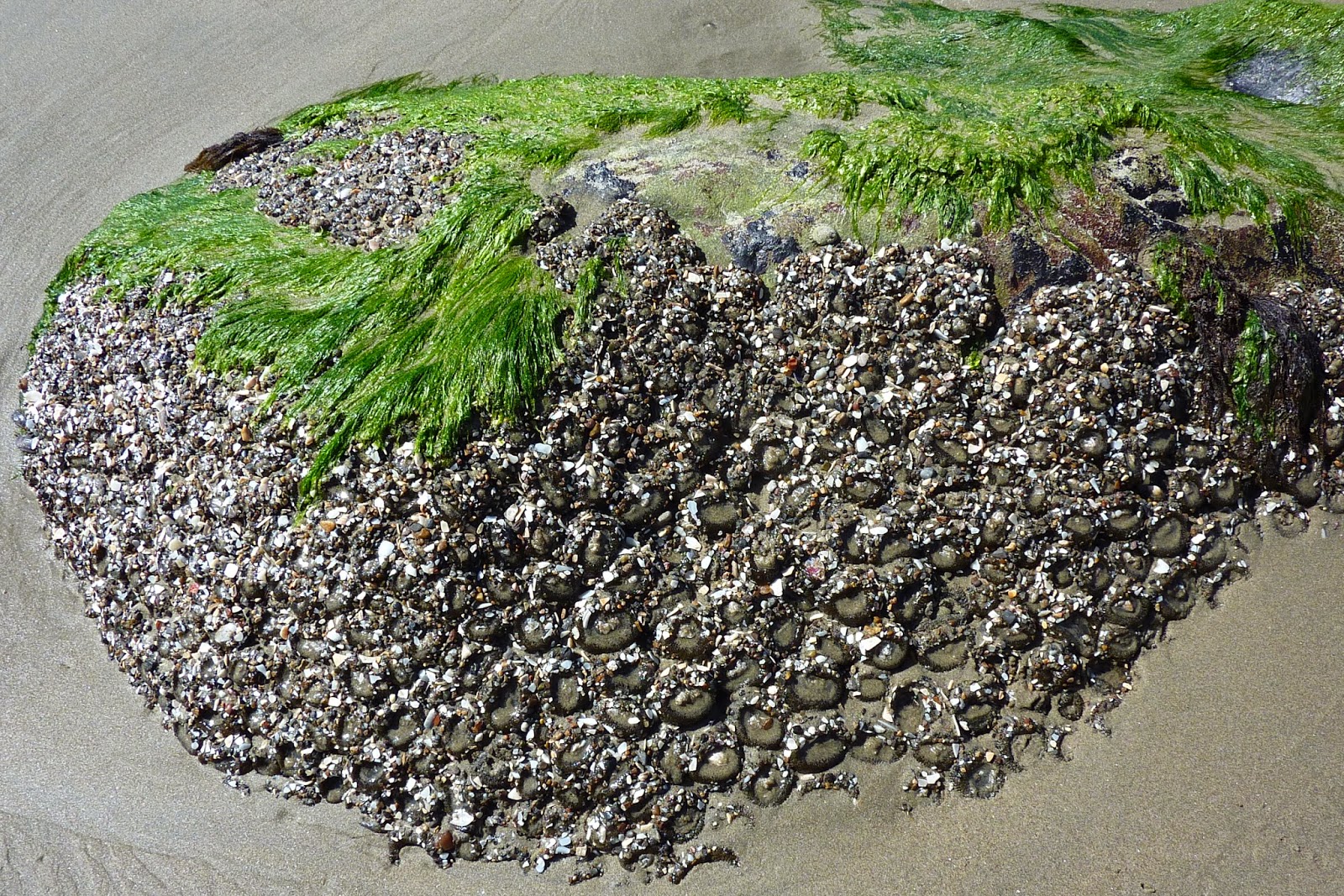
Sea anemones exposed thus closed up.

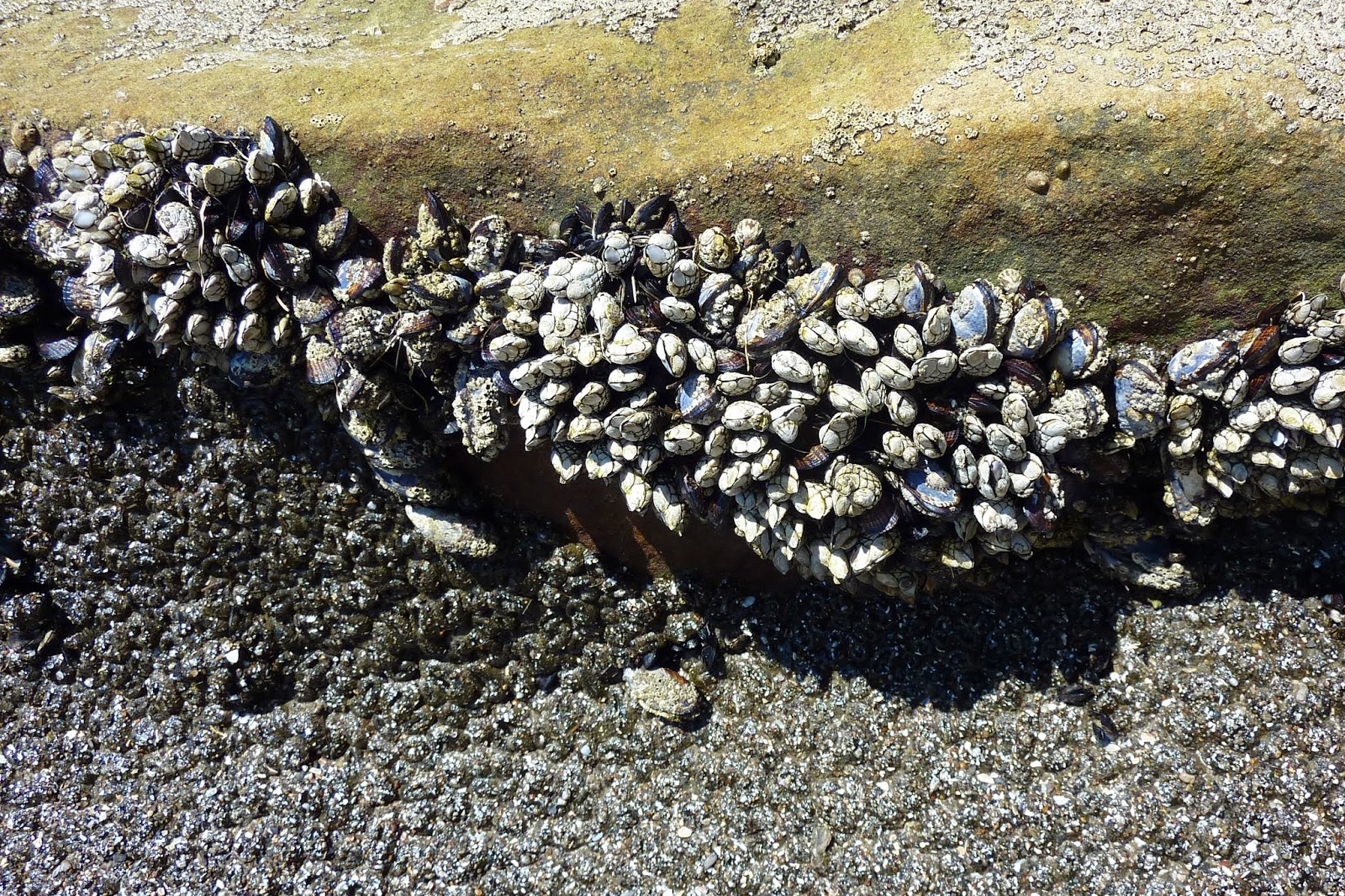
Barnacles up close and personal.

The view from Butterfly Beach with her abrupt sandstone cliffs looking towards East Beach never ceases to take my breath away and amaze me!


Another morning's walk along the beach brought Tucker down the steps onto Butterfly Beach fresh and rested to tussle with Shasta.  Shasta and Tucker had met the day before but Tucker was tuckered out from his long romp on the beach before meeting up with Shasta.


And before our arrival the impermanence artist had already been onto the beach creating.


And another opportunity to capture the beauty of the sandstone cliffs. The shore birds are not as plentiful during the Spring and Summer as in the Winter; however, we were presented with a few of these awesome creatures.

Marbled godwits finding breakfast in the freshly surf washed sand.

Visting Santa Barbara is filled with glorious experience with food: buying wonderfully fresh, tasty organic produce at the Saturday morning Farmer's Market and the Tuesday evening Farmer's Market right on State Street in the 500-600 blocks, then preparing tasty meals in the kitchen of our East Beach cottage; partaking of mouth watering Mexican meals at La Super Rica, and enjoying a celebratory birthday dinner at Toma (new in Santa Barbara since our last visit and voted #1 on TripAdvisor Santa Barbara).  Additionally what a wonderful culinary foray as I relaxed in the warm sunshine reading The Nourished KItchen: Farm-to-Table: Recipes for the Traditional Foods Lifestyle by Jennifer McGruther, a birthday gift from Dwight's daughter, Katie. More of this book In a future post. 

And may you


Monday, April 28, 2014

Canary in the Coal Mine

When one is a "canary in the coal mine" one has difficulty understanding the knowledge being delivered, then determining "so what" while embracing humility in the process. During the ten years of experience healing the autoimmune dis-ease that allowed transformation from a workaholic to a more balanced life focusing on habitat restoration and interconnectedness, I discovered a sensitivity to the imbalances around me that other individuals around me did not seem to be aware of. Toxins in the environment, foods not easily digested (like soy, Brassica family especially raw, grain unless sprouted, and nuts) or foods indigestible by nature (like food prepared in a microwave), acid drinking water, fabric made from synthetic materials-- all these caused, early on in my healing, a violent reaction forcing me to bed and unable to keep anything in my stomach for days. This "canary in the coal mine" warning of what is askew in the web of life on our planet seems far fetched to many people and yet so real to others I encounter in my everyday life. In honoring this sensitivity/gift, the reminder that humility is "noble only when it highly values itself, which is not the same as low self esteem or lack of self worth" is ever so helpful.


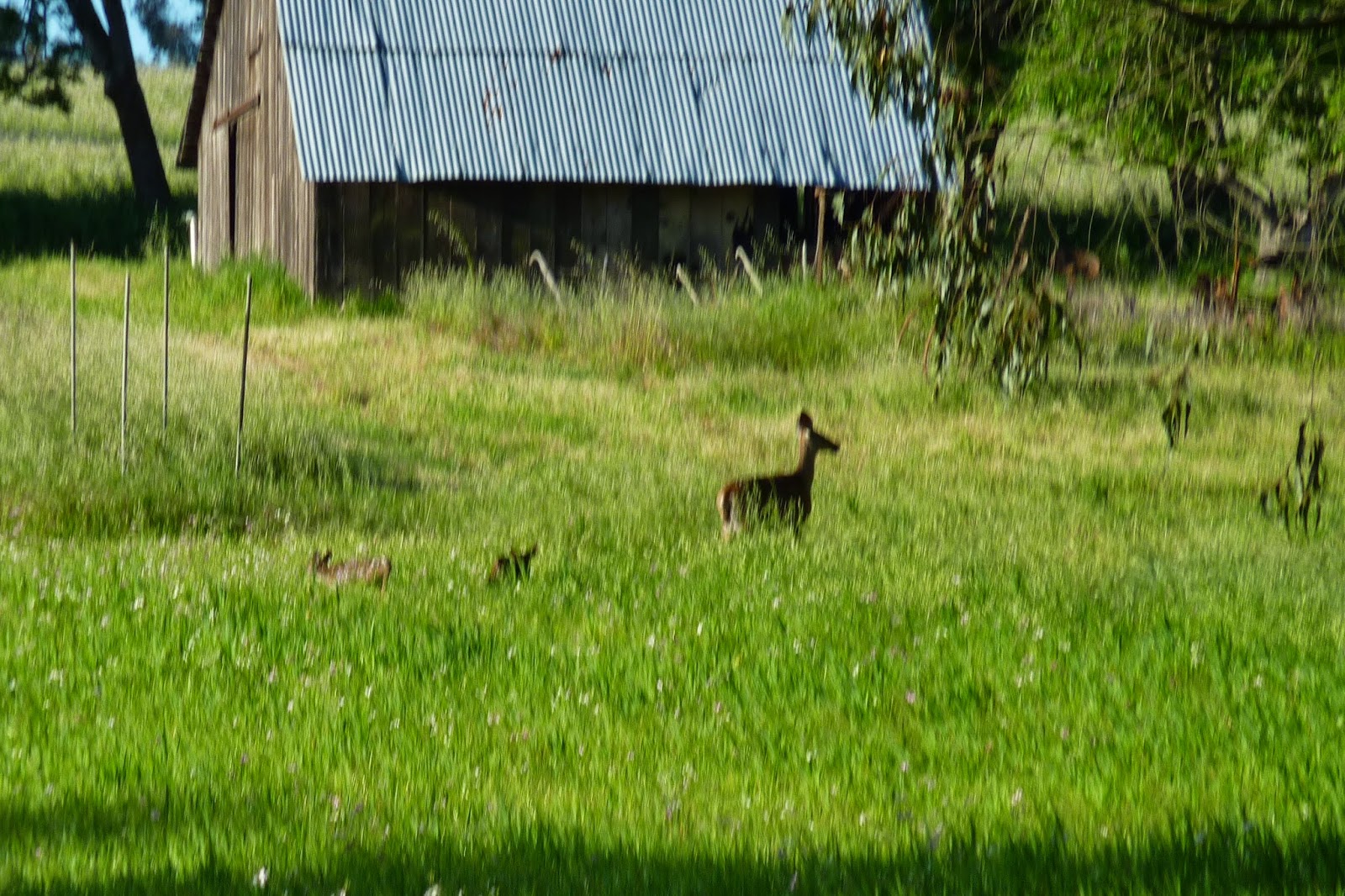
Here in the Hessel Area of West Sonoma County there are many deer. Usually in the Fall we see a small herd of sometimes up to a dozen deer, usually with a buck present too. This late Winter past the congregation happened after the rains came and the grass greened and grew. A few days ago such a wonderful spectacle . . . just as dawn lightened the sky there was a deer standing, standing, standing for a very long time, perhaps an hour. And then a small creature was evident in the grass . . . "a baby deer running to mom for a snack" with the doe very attentive to her little one. As the little one finished nursing a second one showed up in the grass, also running to mom for a snack.


"If DEER has chosen to appear to you, it is asking you to encourage 
that part of yourself that is not afraid to be soft, gentle and humble.
     Deer spirit is the humility to not need to be seen or known, which of itself holds 
great value when it comes from a place of inner strength.  It watches from a hidden place 
and is quietly aware, not needing to speak what it knows. 
Deer is the inherent beauty of stillness and simplicity within, 
a gentle nobility that brings peace to its environment . . . "
"Deer Facts
Deer are the most common large wild animal in North America today.
A baby fawn is camouflaged by spots all over its back,
which looks to predators like splashes of sunlight on the forest floor.
Predators cannot smell fawns, for they are born without scent 
which develops after the first week of life.
A fawn can stand at birth and by the end of a week they are able to run.
If a doe has two or more fawns, she hides them in different locations
so that if a predator finds one, the others are safe.
Although generally deer run quickly from predators, 
doe protecting their fawns have been know to fight off
eagles, coyotes, bobcats and mountain lions with their sharp hooves."
Spirit Animals
by Victoria Covell
illustrations by Noah Buchanan

This glorious sight reminds this "canary in the coal mine" that no appreciation from others is necessary; rather resting centered and balanced is of high value at this time on our planet of shifting, chaotic change. 

Heart shaped leaved Hoya purchased in Phoenix from the Botanical Gardens many years ago.
The blossoms are sporadic but gorgeous and drip with nectar.
One can only image what BEing is nourished by this delectable nectar.

Continue to 


Tuesday, April 15, 2014

What Rose Taught Me

For almost two years now our dear dog Rose has not been with us. I miss her everyday. And Shasta is working her magic by shining her light on the darkness I carry within. Grieving takes as long as it takes.

Last year Chris Boyd made a special marker for Rose's Rest.


Rose taught me a very valuable lesson about pharmaceutical drugs as opposed to herbal medicines.
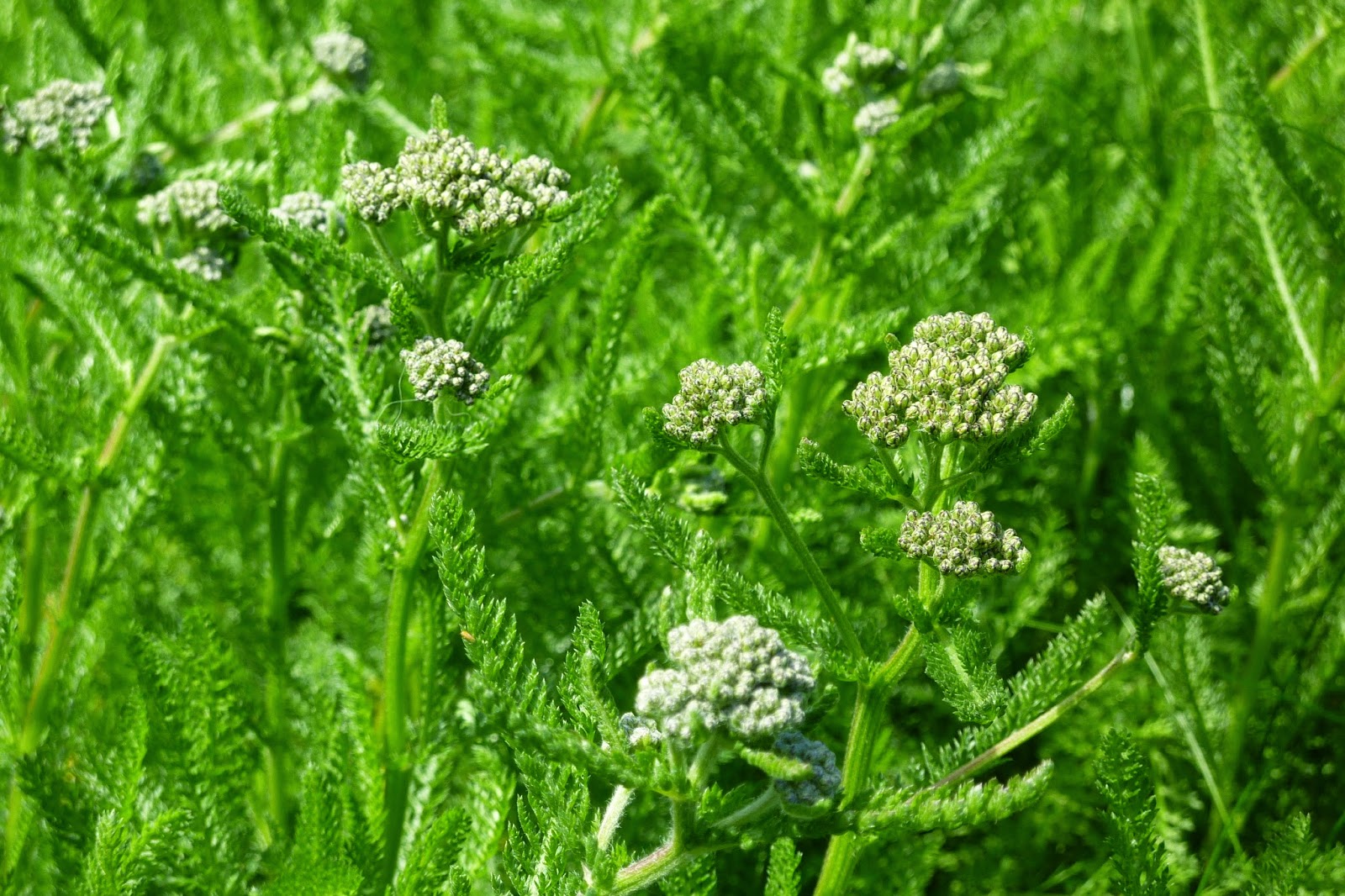
Yarrow flowers and leaves have been
used for thousands of years. An example
is on the ancient battlefields where the 
leaves and flowers were thickly applied 
to staunch bleeding.

Doctors practicing within the allopathic system have one standard response, or so it seems to me since I have heard it from quite a number medical doctors, to the use of herbal medicines, "there is no quality control."  Herbal medicines do not kill people like those produced by the mega pharmaceutical industrial machine. Nor do herbal medicines have "side effects," which in my way of present thinking is a misnomer for how the drug actually affects the human body.

Homeostasis is a natural process by which the human body rights itself, or in other words, a way to keep the human organism in balance. The drugs, used as a matter of course for almost any ailment a person goes to see her or his doctor about, do nothing to support this process. From Rose I learned that herbal medicines support this natural rebalancing of the physical form. After her leg amputation, the vet who did the surgery sent home with us not only narcotics to control the pain, but pharmaceutical drugs to "fight infection" and "reduce the inflammatory process." None of these drugs was to Rose's liking. She said the antiinflammatory drug actually blocked her "natural rhythm" and the antibiotic caused violent vomiting. I was able to talk the vet into allowing me to use an oil I had made instead. 

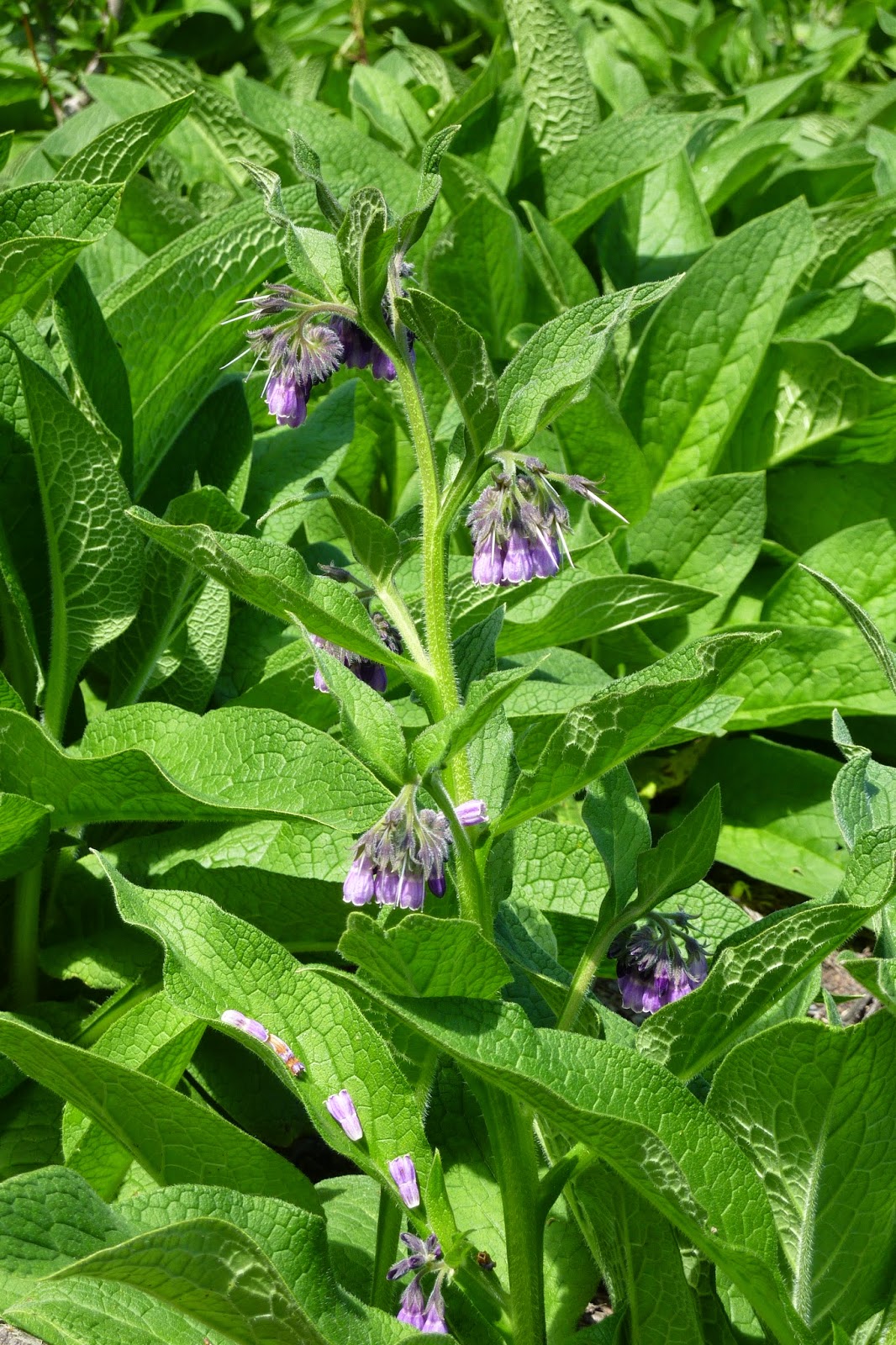
This organic olive oil infusion of comfrey, plantain and yarrow flowers, 
Comfrey
Plantain
Yarrow
once applied to Rose's shaved skin around the amputation site, worked magic. Within a few hours of application, she wanted to go out and pee. Well, she had the most huge pee I have ever seen from any of my dogs. From thence forward there was no swelling in the area. There was also no redness and the wound healed incredibly fast. After 48 hours the only medicine Rose found supported her healing was the oil of comfrey, plantain and yarrow.
The vet insisted Rose continue to take an antibiotic.  I insisted on a different one than the original one that caused the fierce vomiting. Rose agreed to take it saying, "if you insist but I do not need it."  All the antibiotic capsules she took as prescribed until they were gone.  

So what Rose taught me was, as any herbalist knows, that herbal medicines made with the whole plant with no man made chemicals will work with the body's natural cycle not only supporting homeostasis but healing as well. Herbs are a part of the interdependent fabric
of all BEings.


"I thank you God for most this amazing day:
for the leaping greenly spirits of trees
and a blue true dream of sky;
and for everything which is natural 
which is infinite
which is yes."
e.e.cummings

As you consider healing choices and "everything which is natural" may you 


Friday, April 11, 2014

California Wildflowers

This Thursday past Dwight and I joined a large group divided into four, each with a leader, to visit the privately owned Van Hooser Wildflower Preserve not far off Arnold Drive in Sonoma, Calfornia. The Sonoma Ecology Center offers walks here to enjoy the spectacular land of which so little remains in Sonoma County.


On our walk 
we could see the sadly barren landscape on adjacent property where the water was funneled to water grapes and the land plowed. The stark contrast was so telling.

Near the beginning of the four or so mile walk I noted the hugest Buckeye tree I have ever seen. In evidence also were four oak species. The contrast of their leaf color was so beautiful: the deciduous oak leaves were lighter and the live oaks a very deep, dark green.


Wavy leaf soap plant of which many
were visible near where the walk commenced.
Checkerbloom in the foreground
with Sun cup behind.
This Narrow-leaved mule ear is just beginning to flower.
And the Coast mule ears with their wider, darker
green leaves were also just beginning to flower.
The massive number of plants portended a
spectaclar display as the weather warms.


One of many outcroppings of Sky Lupine.

Purple sanicle


Fiddleneck

Pacific snakeroot

Lace pod
gorgeous huge old oak snag with its many barren branches
 filled with acorns to feed many families of woodpeckers.
One of many Northern California poppy displays seen.
Popcorn flower seen on the descent into the parking area.
See the caterpillar-like seed pod forming?
Caterpillar plant is another common name for this plant.
In evidence also were many blooming Meadowfoam, Tidy Tips, California buttercups, California golden violet, Iris, Blue eyed grass, Storks bill, with Yarrow just beginning to bloom. I was so very happy to see many of the plants that grow here at MuRefuge in their chosen native habitat. Such observation provides so much information about the plant, not only where it thrives but with whom. Such a wonderful outing!

As we did often on our walk, may you